I’ve recently published a couple of pieces that have created anxiety in the PM community (i.e. how AI is getting closer to replacing PMs, which parts of the job are most likely to be impacted), so I wanted to take this week to share an important message: I believe that product managers are the *best*-positioned role in tech to thrive in a world of AI.
In fact, many jobs will start to look more like product management.
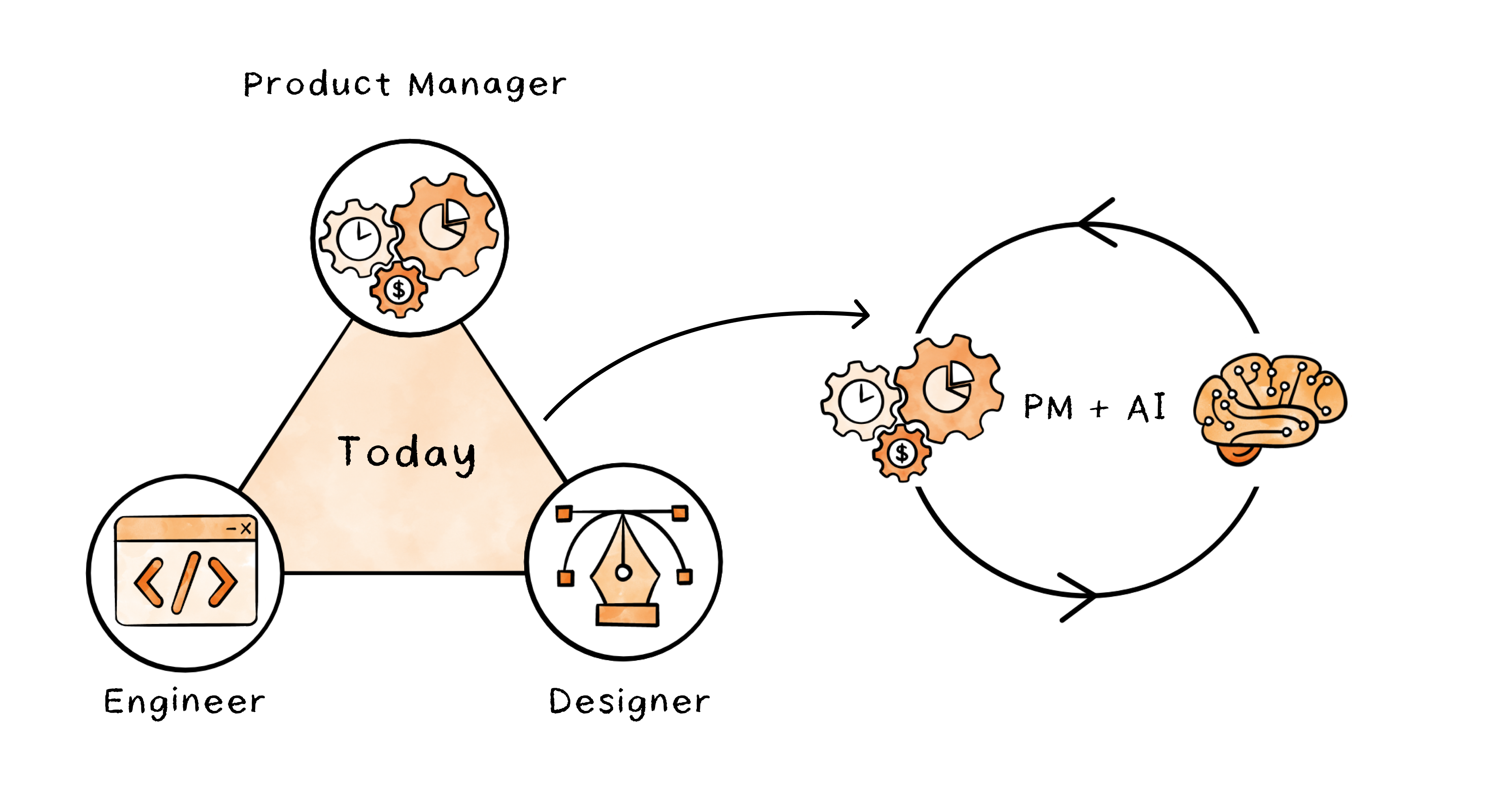
Pop quiz: Which tech role is best at:
1. Identifying what to build 2. Distilling and communicating requirements 3. Prioritizing everyone’s ideas to the highest-ROI opportunities 4. Coordinating stakeholders, inputs, and conflicting needs 5. Giving feedback on designs to improve the product’s impact 6. Developing GTM strategy 7. Understanding business strategy 8. Crystallizing and getting buy-in for a vision 9. Influencing 10. Writing
I think the answer is obvious.
AI is good at doing what it’s told, but someone needs to be skilled at pointing it in the right direction, iterating until the work is great, shipping it, and driving adoption. That’s literally the job of a product manager.
Product management is evolving
Here’s how I’ve historically described the job of a product manager:
#### Your job as a PM is to deliver business impact by marshaling the resources of your team to identify and solve the most impactful customer problems.
Here’s my updated definition:
#### Your job as a PM is to deliver business impact by marshaling the resources of your team (*both human and AI*) to identify and solve the most impactful customer problems.
The most valued skill set will increasingly shift from building to knowing what to build, giving clear instructions for what to build, and having the taste to know if what you’ve created is great.
We aren’t in a place yet where someone can use AI tools to completely build great products, but every few months it feels like we’re taking a big leap closer.
Why PMs won’t be replaced with AI anytime soon
I’ve written about how many parts of the PM job will be impacted (or taken over) by AI over time, and what I haven’t made clear enough is that other tech roles will be impacted much more, and more quickly.
For better or worse, the PM job is an amalgamation of soft skills—communication, collaboration, coordination, influence, taste, vision, etc. People stuff! Glue stuff. Skills that AI will have the toughest time replacing.
Hard skills, like writing code, creating designs, analyzing data, extracting insights from research—this is work that AI is very good at.
A top-tier PM with the skills to fully harness AI’s capabilities is going to be the most valuable role in tech.
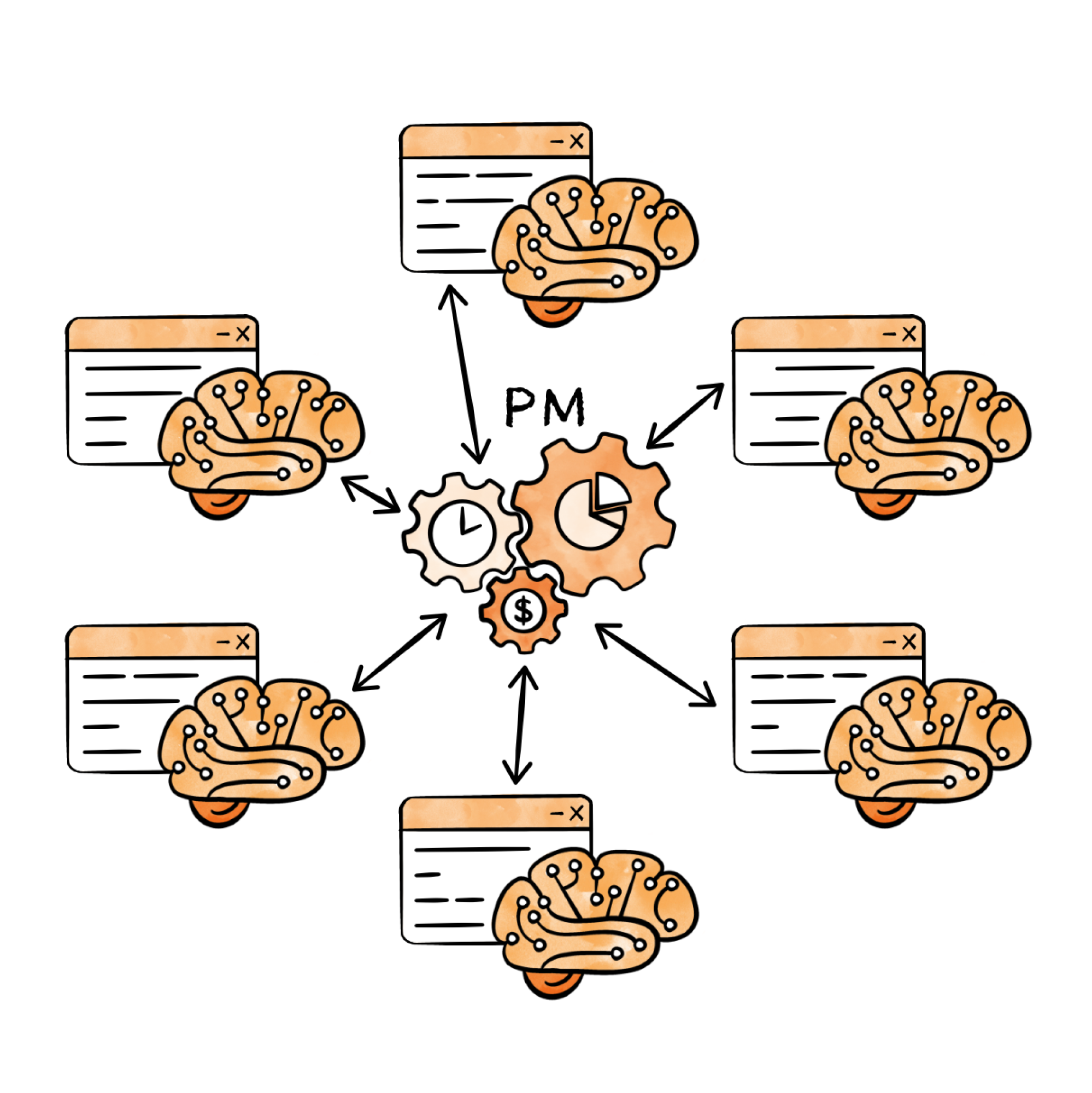
I’m not saying that engineers and designers and other roles will totally disappear; however, the engineers and designers with the strongest PM-type skills—identifying customer pain points, understanding business levers, clearly communicating, turning ambiguity into action—will do best.
Peter Thiel recently made this point—that AI is bad news for people with strong math skills and good for people with strong soft skills:
#### What about product-minded engineers?
Yes, engineers with strong product and business sense will do well. They are basically a PM and engineer in one. And it’s their product/business sense that will make them special in the future. Over time, they’ll look more like PMs than engineers.
#### What about designers?
Same as above. The more PM’y the designer, the better they’ll do. That said, a designer’s taste, empathy, and desire to solve customer problems and make the experience ever-better, plus the ability to actually design, and identify great design, will certainly be a superpower. However, if I were a designer today, I’d be closely studying the best PMs I know.
#### What about founders?
PMs and founders are kind of the same role in many ways. There’s a reason PMs are often called the “CEO of the team.” So everything I’m describing about PMs applies to founders as well.
Evidence of this already happening in other verticals
We’re already seeing creation shift from people doing the creating to people telling the AI what they want created. Some examples:
1. Music: Suno (currently the fastest-growing AI product in the world) lets you play PM for music. You describe in words what music you want to hear, and it goes off and creates it. Here’s a song I made with the prompt “A sea shanty about how product managers will thrive in a world of AI”:
2. Movies: Pika, Runway, and Sora allow you to be PM for video. Describe what movie you want, and it creates it for you. As these tools improve, you’ll be able to refine and iterate until you have something great.
3. Engineering: As I’ve written about previously, Devin, GitHub Copilot Workspace, Magic, and other startups are building increasingly better AI engineers that take your instructions and build the product for you. Here’s a whole thread of mind-bending demos of people coding with a product called Cursor AI, including an 8-year-old building a chatbot in 45 minutes. We’re not totally there yet, but we’re on our way. Here’s an example of what this might look like:
Jensen Huang, CEO of Nvidia (currently the third most valuable company in the world), explained recently that his vision is to create a world where no one needs to learn how to program:
“It is our job to create computing technology such that nobody has to program. That the programming language is human. Everybody in the world is now a programmer. This is the miracle of artificial intelligence.”
4. Design: Figma recently announced an AI tool that auto-generates product designs based on a description you provide. There’s also Uizard, which goes even further.
How to set yourself up to thrive in a world of AI
Simply being a great PM is going to set you up well. So keep it up! But if you are looking to maximize your chances of thriving in a world of AI, a few suggestions:
1. Get your hands dirty: Stop reading about AI and use it. Experiment with using ChatGPT, Perplexity, and Claude in your day-to-day work. 2. Watch and learn:
1. Follow Dan Shipper’s journey as he builds AI products and interviews people on how they use AI in their day-to-day work. 2. Follow Claire Vo’s journey building and evolving ChatPRD as a side project that now generates six figures. 3. Check out some of Andrej Karpathy’s videos explaining how LLMs work. 4. Check out Andrew Ng’s online courses on machine learning, and AI for everyone. 3. Read about where things are heading:
1. The Rundown, Superhuman AI, and/or Ben’s Bites to stay up-to-date on what’s new in AI 2. No Priors podcast with Sarah Guo and Elad Gil 3. Eric Schmidt’s AI prophecy: The next two years will shock you 4. Strengthen the core PM skills that’ll matter most in an AI world:
1. Identifying what to build (and being right) 2. Distilling and communicating requirements 3. Prioritizing everyone’s ideas to the highest-ROI opportunities 4. Coordinating stakeholders, inputs, and conflicting needs 5. Giving feedback on designs to improve the product’s impact 6. Developing a GTM strategy and driving adoption 7. Understanding business strategy 8. Crystallizing and getting buy-in for a vision 9. Influencing 10. Writing
That’s my thinking! I’d love to know what you think. What do you agree or disagree with? Leave a comment with your thoughts.
A big thank-you to [Dan Shipper](https://x.com/danshipper/) and [Dennis Yang](https://www.linkedin.com/in/dennisyang/) for helping me think this post through.
Have a fulfilling and productive week 🙏
👀 Hiring? Or looking for a new job?
I’ve got a white-glove recruiting service for senior product roles, working with a few select companies at a time. If you’re hiring, apply below.
If you’re exploring new opportunities yourself, use the same button above to sign up. We’ll send over personalized opportunities from hand-selected companies if we think there’s a fit.
If you’re finding this newsletter valuable, share it with a friend, and consider subscribing if you haven’t already. There are [group discounts](https://www.lennysnewsletter.com/subscribe?group=true), [gift options](https://www.lennysnewsletter.com/subscribe?gift=true), and [referral bonuses](https://www.lennysnewsletter.com/leaderboard) available.
Sincerely,
Lenny 👋